The Role of Multi-State Dairy Cooperatives in Strengthening India’s Rural Economy
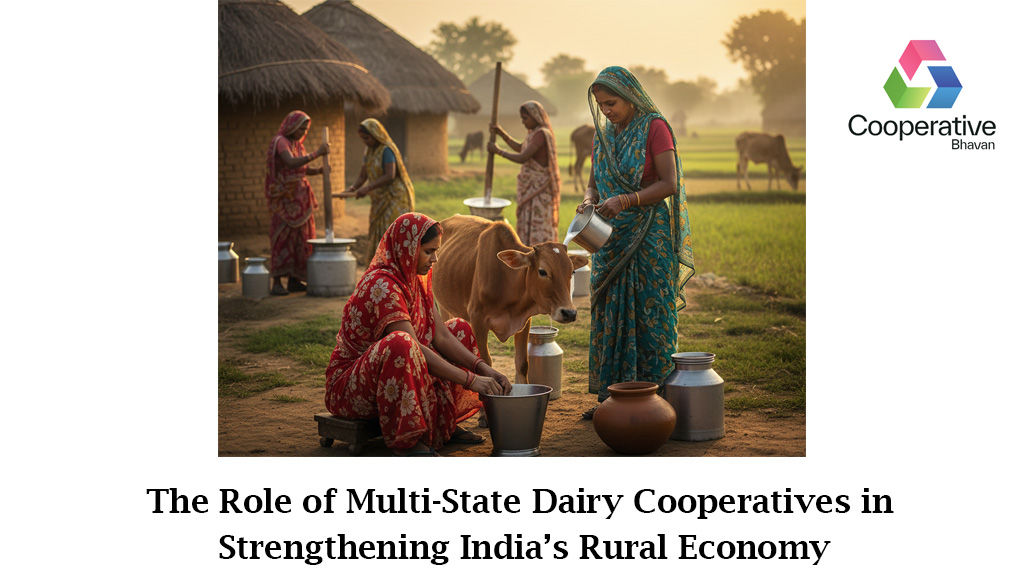
India’s rural economy has always relied heavily on agriculture and allied activities, with dairy playing one of the most influential roles. Among the different cooperative structures, Multi-State Dairy Cooperatives stand out as powerful institutions that connect rural farmers with national markets, ensure fair pricing, and promote sustainable livelihoods. Their growing impact is further supported by streamlined processes such as Multi State Cooperative Society Registration in India and modern infrastructure like Cooperative Bhavan, which guide and empower cooperative entities.
This article explores how multi-state dairy cooperatives strengthen India’s rural economy and why they remain crucial to the nation’s socio-economic progress.
1. Multi-State Dairy Cooperatives: An Overview
A Multi-State Dairy Cooperative is a cooperative organization that operates across multiple states under the Multi-State Cooperative Societies Act, 2002. These cooperatives unite dairy farmers from different regions, enabling them to work collectively for better production, processing, marketing, and profit-sharing.
With the increasing demand for quality dairy products across India, many new societies are being formed. The process of Multi State Cooperative Society Registration in India has also become more structured, allowing dairy cooperatives to expand their reach statewide and nationwide.
2. Empowering Rural Livelihoods
a. Stable Income for Farmers
Multi-state dairy cooperatives provide a guaranteed platform for rural dairy farmers to sell milk and related products at fair and consistent prices. This reduces dependency on middlemen and protects farmers from market fluctuations.
b. Employment Generation
From cattle care to milk processing, logistics, and distribution, dairy cooperatives create thousands of direct and indirect jobs, elevating the economic status of rural households.
c. Women Empowerment
A significant portion of dairy activities—milking, feeding, and cattle care—is managed by women. Cooperatives offer them financial independence and leadership opportunities within the society.
3. Strengthening Market Access and Infrastructure
a. Direct Access to National Markets
A multi-state presence allows cooperatives to distribute dairy products across India efficiently. This enhances the brand value of rural dairy products and opens up large-scale market opportunities.
b. Investment in Cold Chain & Technology
Modern dairy cooperatives invest heavily in chilling centers, quality control labs, automated processing plants, and supply chain systems. With support from agencies like Cooperative Bhavan, improved technological adoption becomes more accessible.
c. Better Value Addition
Members benefit from value-added dairy products such as cheese, ghee, paneer, and flavored milk, which offer higher profit margins.
-
Improving Productivity Through Farmer Support
-
a. Training & Capacity Building
Cooperatives regularly hold training programs on cattle health, feeding practices, and improved dairy management.
Organizations like Multi State Cooperative Society project builders in Kerala also help societies develop strong operational frameworks.
b. Access to Veterinary Care
Most dairy cooperatives offer timely veterinarian services, artificial insemination, and nutrition support, improving cattle productivity.
c. Credit & Subsidies
Through cooperative networks, farmers gain better access to government schemes, loans, and subsidies designed for dairy development.
- Promoting Rural Industrialization
Dairy cooperatives act as catalysts for rural industrialization by establishing milk collection centers, mini-processing units, and distribution hubs within rural regions. Their operations encourage economic activities in remote areas, reducing migration towards cities.
Multi-state structures, backed by streamlined processes such as Multi State Cooperative Society Registration in Kerala, help societies expand and operate smoothly across different states.
6. Ensuring Transparency and Democratic Governance
Cooperatives work on democratic principles—one member, one vote.
This ensures transparency, accountability, and inclusiveness in decision-making. Members feel involved and empowered, contributing to the long-term sustainability of the cooperative.
7. Contribution to National Economic Growth
Multi-state dairy cooperatives support national economic objectives by:
- Increasing milk production and self-sufficiency
- Boosting rural income and reducing poverty
- Encouraging entrepreneurship in the dairy sector
- Strengthening India’s cooperative movement
- Promoting export-ready dairy products
Conclusion
Multi-state dairy cooperatives are essential pillars of India’s rural economy. By supporting farmers, improving infrastructure, ensuring fair pricing, and enabling large-scale market access, they uplift millions of rural households. With initiatives like Multi State Cooperative Society Registration in India, Multi State Cooperative Society Registration in Kerala, and the guidance of infrastructure providers such as Cooperative Bhavan and Multi State Cooperative Society project builder in Kerala, these cooperatives are becoming more structured, efficient, and impactful.
As India continues to modernize its dairy sector, multi-state dairy cooperatives will remain powerful engines of rural development and economic progress.































 Mail
Mail  Booking
 Call
Call